
Introduction
Many people either never check their CIBIL score at all, or assume it costs money and skip it entirely — both are costly habits. Not knowing your score means you can’t catch errors before they affect a loan application, and delaying your first check means delaying the moment you can actually start improving it deliberately.
You’re Entitled to One Free Report Per Bureau, Per Year
In India, credit bureaus (CIBIL/TransUnion being the most commonly referenced, alongside others like Experian and Equifax operating in the country) are required to provide consumers with one free credit report per calendar year, directly through their official website. This isn’t a promotional gimmick — it’s a regulatory entitlement, and it’s the safest way to check your score without handing your data to a third party.
Where to check safely:
– CIBIL’s own official website offers a free annual report
– Other bureaus operating in India (Experian, Equifax, CRIF High Mark) similarly offer periodic free access
– Many banks and financial apps also display your score for free as a customer-retention feature, often pulling from one of these bureaus with your consent
A caution on third-party apps: many personal finance apps offer “free credit score check” as a feature, which can be genuinely convenient, but always confirm the app is pulling your actual score from a legitimate bureau (not an estimated/proxy score) and understand what they do with your data before granting access — read the permissions requested during signup rather than clicking through them automatically.
Does Checking Your Own Score Hurt It?
No. This is one of the most persistent myths in Indian personal finance. Checking your own score is classified as a “soft inquiry” and has zero impact on your credit score, no matter how often you do it. Only “hard inquiries” — triggered when a lender checks your score because you’ve applied for credit — have any effect, and even then, the effect is modest and temporary for a single application.
Practical implication: check your own score as often as you find useful, with no downside. Checking monthly during a period when you’re actively working to improve it (e.g., after paying off debt) is entirely reasonable.
What to Actually Look For When You Check
- The score itself (300-900 range) — but don’t stop there.
- Every account listed — confirm every loan and credit card shown is actually yours. Errors here (an account you never opened, or one that’s actually closed but shown as active) are more common than most people expect, and can meaningfully drag down your score if left uncorrected.
- Payment history per account — check for any missed payments incorrectly marked, especially on accounts you’re certain you paid on time.
- Current outstanding balances and credit limits — confirm your reported utilization matches your actual recent statements; a reporting lag or error here can misrepresent your utilization ratio.
- Recent hard inquiries — confirm every listed inquiry corresponds to an application you actually made. An inquiry you don’t recognize could indicate fraudulent application activity in your name.
What to Do If You Find an Error
Every bureau has a formal dispute resolution process, typically accessible directly through their website or app. You’ll need to specify the exact inaccuracy (wrong account, incorrect payment status, wrong balance) and the bureau is required to investigate and correct verified errors, typically within a defined resolution window. This is worth doing immediately upon finding an error — a single incorrect “missed payment” entry can meaningfully lower your score until corrected.
How Often Should You Actually Check?
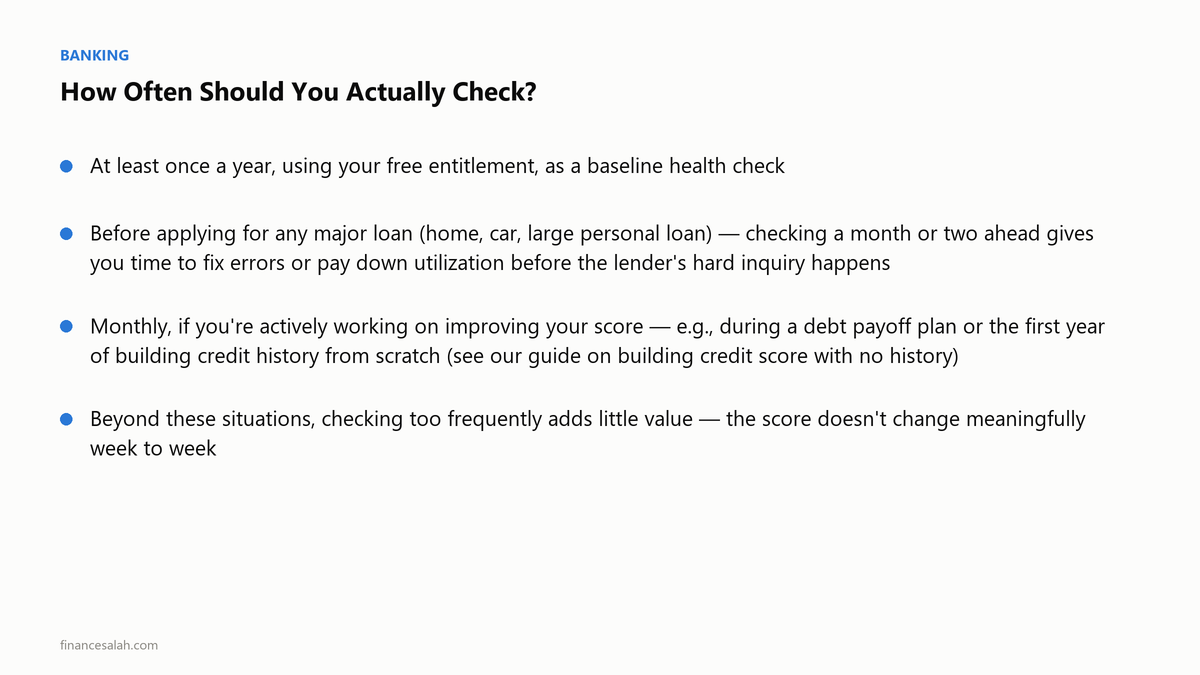
- At least once a year, using your free entitlement, as a baseline health check
- Before applying for any major loan (home, car, large personal loan) — checking a month or two ahead gives you time to fix errors or pay down utilization before the lender’s hard inquiry happens
- Monthly, if you’re actively working on improving your score — e.g., during a debt payoff plan or the first year of building credit history from scratch (see our guide on building credit score with no history)
- Beyond these situations, checking too frequently adds little value — the score doesn’t change meaningfully week to week
Frequently Asked Questions
Q: Is my CIBIL score the same across all lenders?
A: The underlying data is similar, but different bureaus (CIBIL, Experian, Equifax, CRIF High Mark) may show slightly different scores due to differences in their scoring models and which lenders report to which bureau. Checking one is a reasonable proxy, but don’t be alarmed by small variations between bureaus.
Q: Do I need to pay to see my full credit report, or just a summary score?
A: Your free annual report from each bureau typically includes the full report, not just a summary number — this is where you’ll see the account-level details worth reviewing for errors.
Q: What’s a good CIBIL score to aim for?
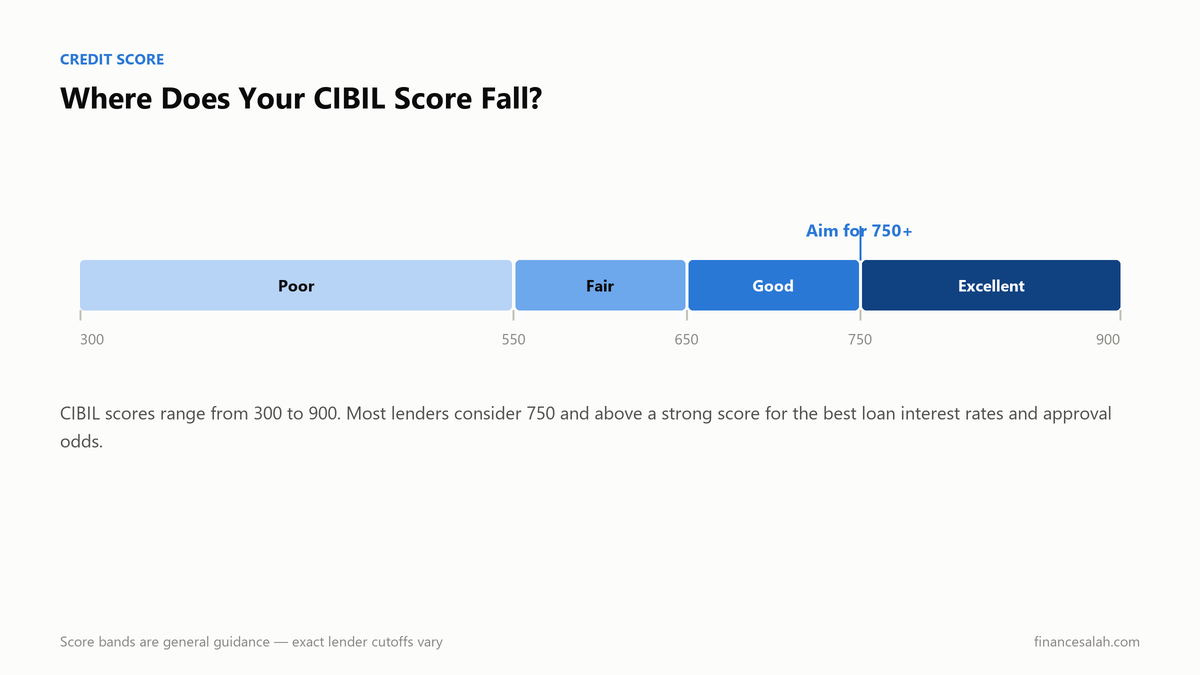
A: Generally, scores above 750 are considered good to excellent for most lending purposes, though specific lender thresholds vary by product and their own risk criteria.
Q: Can I check my CIBIL score without a PAN card?
A: A PAN card is typically required for identity verification when requesting your credit report in India, since it’s the primary identifier linking your financial accounts to your credit file.
Conclusion
Checking your CIBIL score costs nothing, carries zero risk to the score itself, and is the only way to catch errors before they affect a real loan application. Use your free annual report from the official bureau website at least once a year, more often if you’re actively improving your score or preparing for a major loan application — and always review the full account-level detail, not just the headline number.
Related Reading
- How to Build Credit Score in India With No Credit History
- Credit Card vs Debit Card: What Should Young Indians Use First?
- Best Credit Cards for Beginners in India 2026
This article is for general educational purposes and does not constitute personalized financial advice. Always use official bureau websites or reputable, consent-based apps to check your credit report.